
How long does a dental implant take? The surgery itself is usually short, often around an hour or two for a single implant, but the full treatment, from the first consultation to the final crown, typically takes several months. Most of that time is healing: the implant needs to fuse with the jawbone before it can carry a permanent tooth. NHS hospital patient information describes this healing stage as about 3–6 months, with the whole process taking anything from around 6 months to over a year depending on your bone and whether grafting is needed.
This guide breaks the timeline down stage by stage, explains what changes it, and covers recovery: pain, swelling, and how long after dental implants you can eat normally.
Dental implant timeline at a glance
- Implant surgery: commonly 1–2 hours for one implant; longer for several implants or grafting
- Initial recovery: discomfort and swelling usually settle within days to a week or two
- Healing (osseointegration): about 3–6 months
- Bone graft, if needed: can add around 4–6 months
- Whole treatment: roughly 6 months to over a year
How Long Does a Dental Implant Take, Stage by Stage?

1. Consultation, scan and planning
Treatment starts with an examination, X-rays and usually a 3D (CBCT) scan to measure the bone and locate nerves and sinuses. The dentist checks gum health, any infection and your medical history, then plans the implant position. If you are travelling for treatment, much of the initial assessment can start remotely with your existing X-rays or scans, but the final plan is confirmed in the chair.
2. Extraction and preparation (if needed)
If the tooth is still in place, it has to be removed first. Sometimes the implant can be placed on the same day as the extraction (an immediate implant). In other cases the dentist waits for the socket to heal, which commonly takes a few weeks to a few months. If there is not enough bone, a bone graft or sinus lift may be needed before or alongside the implant.
3. Implant surgery
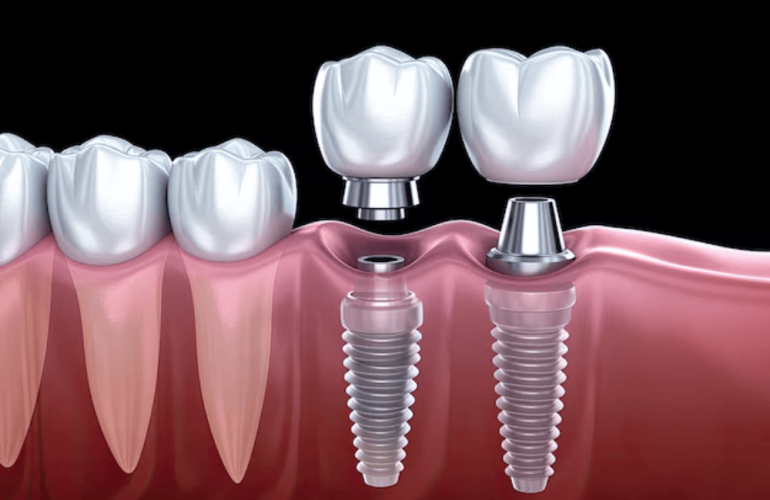
The implant, a small titanium or zirconia post, is placed into the jawbone under local anaesthetic. For a single straightforward implant, the procedure commonly takes around one to two hours including preparation. Several implants, full-arch treatment or grafting at the same time take longer.

4. Healing and osseointegration
This is the longest stage. The bone grows onto the surface of the implant and locks it in place, a process called osseointegration. NHS hospital guidance describes it as taking about 3–6 months. Healing is often quicker in the lower jaw, where the bone is denser, than in the upper jaw. A temporary tooth or denture may be fitted in the meantime so you are not left with a gap.
5. Abutment and final crown
Once the implant is stable, a connector (abutment) is attached and impressions or digital scans are taken. The permanent crown, bridge or denture is then made and fitted, which usually needs one or two appointments over a week or two.
Free assessment · Written plan and quote before you travel
Dental Implant Timeline: Typical Scenarios
| Situation | What happens | Typical overall time |
|---|---|---|
| Gap already healed, good bone | Implant placed, heals, crown fitted | Around 3–6 months |
| Tooth still present | Extraction, then immediate or delayed implant | Around 4–9 months |
| Bone graft or sinus lift needed | Graft heals first, or at the same time as the implant | Around 9–12 months or more |
| Immediate load / All-on-4 | Fixed temporary teeth soon after surgery; final teeth after healing | Temporary teeth within days; final teeth after a few months |
These are general ranges, not a promise. Your own timeline depends on the factors below and is confirmed after a scan.
What Makes Implant Treatment Take Longer (or Shorter)?

- Bone volume and density. Thin or soft bone may need grafting, which adds months.
- Upper or lower jaw. Upper-jaw implants often need longer healing, and back teeth may need a sinus lift.
- Infection or gum disease. These must be treated before implants are placed.
- Smoking. It slows healing and is a known risk factor for implant problems.
- Medical conditions. Poorly controlled diabetes and some medicines can slow healing; tell your dentist about everything you take.
- Immediate loading. Where bone quality allows, temporary teeth can be fitted soon after surgery, as explained in our guide to immediate load dental implants. The bone still needs months to heal before the final teeth.
Dental Implant Recovery: What the First Two Weeks Feel Like
Most people find recovery easier than they expected, especially for a single implant. As a general guide:
- Day 1–3: some soreness, swelling and possibly bruising. Swelling often peaks around the second or third day.
- Day 4–7: discomfort eases; many people are back at work within a day or two of a simple implant.
- Week 2: stitches are removed or dissolve, and the gum has mostly settled.
Prolonged or worsening pain, swelling that keeps increasing after a few days, fever or a bad taste can be signs of infection. Contact your dentist straight away if you notice any of these.
How to relieve pain after a dental implant
- Take the painkillers your dentist recommends, following the dose on the pack.
- Use a cold compress on the cheek for short periods during the first 24–48 hours.
- Rest with your head slightly raised on the first night.
- Avoid hot drinks, alcohol and strenuous exercise for the first day or two.
How to heal faster after dental implants
- Don’t smoke or vape, ideally for as long as possible before and after surgery.
- Keep the area clean: follow your dentist’s instructions on gentle brushing and rinsing, and use any prescribed mouthwash.
- Don’t disturb the site with your tongue or fingers, and avoid chewing on that side.
- Eat well: soft, nutritious food helps the body heal.
- Keep your follow-up appointments so any problem is caught early.
How Long After Dental Implants Can I Eat Normally?
You can eat once the anaesthetic has worn off, but the type of food changes over time:
- First 24–48 hours: cool, soft foods such as yoghurt, soup (not hot), mashed potato, scrambled eggs and smoothies (without a straw if your dentist advises).
- First 1–2 weeks: soft foods you can chew away from the implant, such as pasta, fish and soft vegetables.
- During healing (months): a mostly normal diet, but avoid biting hard or sticky foods directly on the implant until it has integrated and the final crown is fitted.
- After the final crown: most people eat normally, including firmer foods, though very hard items such as ice or hard sweets are best avoided with any tooth.
Dental Implants Abroad: How Many Trips Will You Need?

Because of the healing stage, implant treatment abroad is usually planned as two trips rather than one:
- Trip 1: consultation, scan, any extractions, and implant placement. Allow a few days so the dentist can check healing before you fly home.
- Healing at home: around 3–6 months, with a temporary tooth or denture if needed.
- Trip 2: abutments, scans and fitting the final crowns or bridge, usually over several days.
If grafting is needed, an extra stage may be added, so ask for the full timeline in writing before you book flights. If you are still comparing options at home, our guide to dental implants on the NHS explains who qualifies, and how long dental implants last covers what happens after treatment. For full-arch treatment, see All-on-4 dental implants in Albania.
About Zeus Dental Clinic

Zeus Dental Clinic was founded by Dr. Aida Zhupani and is located on Rruga Dritan Hoxha in Tirana, Albania. The clinic provides dental implants, including All-on-4, All-on-6 and All-on-8 full-arch treatment, as well as zirconia crowns and cosmetic dentistry.
- Free remote assessment: send your X-rays or a recent scan and receive a written plan, timeline and quote.
- Clear trip planning: we tell you how many visits you are likely to need before you book.
- Airport transfer and contact with the team throughout your treatment.
- Opening hours: Monday to Saturday, 09:00–19:00.
Contact us to book a consultation.
Frequently Asked Questions
How long does a dental implant procedure take?
The surgery for a single, straightforward implant commonly takes around one to two hours. Several implants or grafting at the same time take longer.
How long do dental implants take from start to finish?
Usually several months. Healing alone takes about 3–6 months, and the whole process can take from around 6 months to over a year if extractions or bone grafts are needed.
Can you get a dental implant in one day?
In some cases a temporary tooth can be fitted on the day of surgery (immediate loading). The implant still needs months to integrate before the permanent crown is fitted.
How long after dental implants can I eat normally?
Stick to soft foods for the first week or two and avoid biting hard foods on the implant while it heals. Most people return to a normal diet once the final crown is fitted.
Is dental implant surgery painful?
The procedure is done under local anaesthetic, so you should not feel pain during it. Soreness and swelling afterwards are common for a few days and are usually managed with ordinary painkillers.
How much time off work do I need?
Many people return to work within a day or two after a single implant. Allow more time after multiple implants, grafting or full-arch treatment.
Free quote · Fast reply · English spoken
This article is general information and is not a substitute for a dental examination. Healing times and recovery vary from patient to patient. Healing and overall treatment ranges are taken from University Hospitals of Leicester NHS Trust patient information.